The European Way of Dressing And Why It Matters
There's a quiet but unmistakable difference between how people present themselves in Europe versus the United States. It's not about wealth, trends, or even access to fashion; it's about mindset. It’s About how you choose to show up in the world.
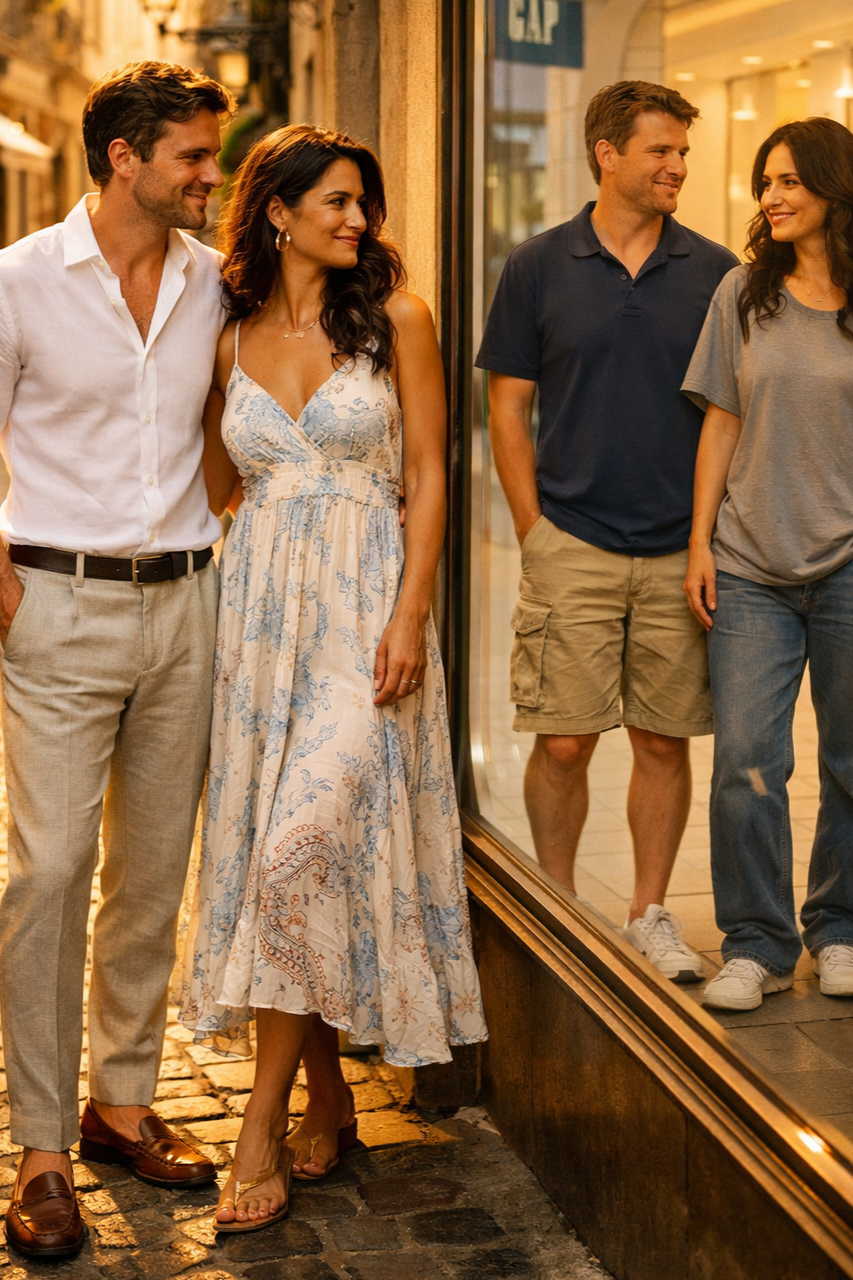
In much of Europe, getting dressed is not treated as an afterthought. It's a daily ritual, a form of self-respect, and a subtle acknowledgment of the shared public space. Even the simplest outfit, a fitted shirt, well-cut trousers, clean shoes, signals care. Not excess. Not vanity. Just awareness.
By contrast, American style often prioritizes comfort above all else. Sweatpants at the supermarket. Pajama pants on a coffee run. Oversized hoodies, leggings worn as default attire, shapeless silhouettes that blur individuality rather than express it. It's not that comfort is wrong, but when comfort becomes the only standard, something gets lost.
Clothing Shapes Behavior
What you wear doesn't just affect how others see you; it influences how you carry yourself. Structured clothing encourages posture, presence, and intention. When your clothes fit well, you move differently. You stand differently. You engage differently.
Loose, oversized, or overly casual clothing tends to do the opposite. It invites passivity. It signals "I didn't think about this," even if that wasn't your intention. Over time, that becomes a habit, not just in dress, but in mindset.
Europeans, generally, don't separate "real life" from "stepping out." Leaving the house is an event worth preparing for, even in small ways. That doesn't mean dressing formally; it means dressing deliberately.
"Leaving the house is an event worth preparing for, even in small ways. That doesn't mean dressing formally; it means dressing deliberately."
Why You Rarely See Pajamas in Public in Europe
In many European cultures, public space is shared space, and that comes with an unspoken agreement: you present yourself with a baseline level of respect. Pajamas, overly revealing loungewear, or visibly "indoor" clothing are seen as private, not public.
It's not about judgment. It's about context.
The idea is simple: how you show up affects the atmosphere around you. When everyone participates in that standard, the environment feels elevated; cafés feel more refined, streets feel more intentional, everyday life feels just a bit more curated.
Masculinity and the Fear of Effort
One of the most interesting contrasts shows up in how men relate to clothing.
In the U.S., many men hesitate around tailored or expressive style. Slim trousers feel "too much." A well-fitted shirt feels "dressy." A leather bag becomes a "man purse." There's often an underlying fear: that caring about appearance somehow threatens masculinity.
But that fear says more about insecurity than strength.
In Europe, masculinity isn't tied to indifference. It's tied to confidence. And confidence doesn't shy away from detail; it embraces it.
"A tailored jacket, a structured coat, a refined leather bag, these aren't statements of vanity. They're signals of self-assurance. Of knowing who you are, and not needing to downplay it."
European men don't avoid style to prove something. They use it, naturally, without overthinking it.
The Power of Fit and Proportion
European style is less about having more clothes, and more about having the right clothes. Pieces that fit. That follow the shape of the body without clinging or drowning it. That create clean lines instead of visual noise.
This applies to everyone.
Oversized clothing can feel safe, but it often hides rather than enhances. Constant reliance on leggings or ultra-casual wear can flatten personal style into a single note. When everything is "easy," nothing stands out.
Well-fitted clothing, on the other hand, creates quiet distinction. It doesn't scream. It speaks clearly.
Dressing Well Is a Form of Respect
For yourself. For others. For the spaces you move through.
It's not about dressing up, it's about not opting out.
The European approach reminds us that everyday life is worth showing up for. That style isn't reserved for special occasions. That effort, even minimal effort, compounds into something meaningful over time.
When you adopt this mindset, things shift.
You feel more put-together without needing more clothes. You gain confidence without forcing it. You stand out, not by being loud, but by being intentional. You experience daily life with a subtle sense of occasion.
And perhaps most importantly, you stop treating yourself like an afterthought.
Because style, at its core, isn't about impressing others.
It's about deciding that how you show up matters. Every day.