The Art of the Frame: How Europeans Hang Their Worlds on the Wall
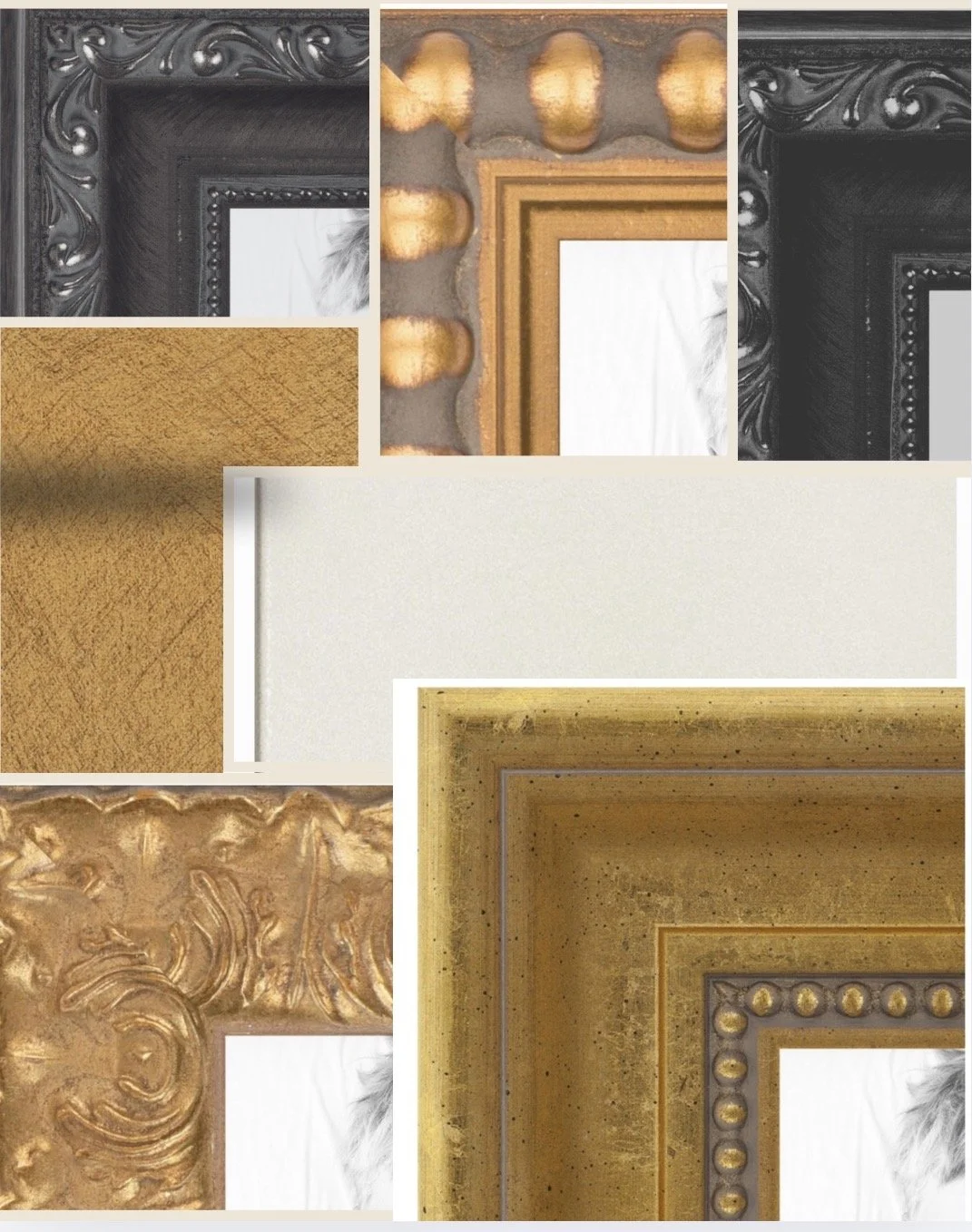
Which frame suits you?
From the gilded salons of Rome to the bare white walls of Copenhagen, a picture frame is never just a frame.
Walk into a home in Milan, then one in Stockholm, then one in Lisbon. The furniture might share a century, the light might fall the same way through the window, but the walls will tell you immediately where you are. Europeans have been living with framed art for centuries, and in that time, each culture has developed something close to a philosophy about it. The frame, it turns out, is one of the most honest things in a room.
Italy: The Frame as Protagonist
In Italy, and particularly in the south, the frame is not a supporting actor. It is the performance. The Italian tradition draws directly from the Baroque, that 17th-century explosion of ornament, drama, and divine self-confidence; and it never quite let go. In a Neapolitan apartment or a Florentine palazzo, you’ll find frames with deep carved gilding, scrollwork that curls like breaking waves, and profiles so thick and layered they cast their own shadows. The artwork inside almost becomes secondary to the theatrical announcement of it.
This is not ostentation for its own sake. For Italians, decorating a wall is an act of cultural memory. Framed oil portraits of ancestors sit alongside reproductions of Renaissance masters, and both are treated with the same reverence. The home is a museum of the self; curated, proud, and unapologetically beautiful. Even in more modern Italian interiors, you’ll find a remnant of this instinct: a single large, heavily framed mirror above a console, or an ornate gilded frame holding something entirely contemporary, the old and the new in deliberate conversation.
France: Romance, Restraint, and the Gallery Wall
The French have always understood that style is a form of argument. Where the Italians opt for grandeur, the French approach their walls with a kind of studied nonchalance; what they might call *un certain je ne sais quo* that is, in reality, extremely considered.
The classic French interior lives somewhere between the Romantic period and the early 20th century. Frames tend toward the ornate but are more restrained than their Italian counterparts: simple gold-leaf moulding, fine linen mats in antique white, the occasional black lacquered frame holding a botanical print or a faded map. What distinguishes the French approach above all is the salon wall: a floor-to-ceiling, edge-to-edge arrangement of mismatched frames, different sizes and eras hung in an organic cluster. It looks effortless. It takes weeks to get right.
This tradition of the accrochage (the hang) treats the entire wall as a composition. Frames bump up against each other at unexpected angles; a tiny watercolor sits beside an oversized vintage poster; family photographs share space with museum postcards. The result is layered, literary, and deeply personal;* a wall that tells the story of a life lived with curiosity.*
Scandinavia and the Nordic Countries: The Anti-Frame
Spend any time in a Danish or Swedish home and you may notice something striking: the walls are almost bare. What hangs on them tends to be simple to the point of austerity; a single lithograph in a thin black aluminum frame, a child’s drawing pinned without ceremony, a lone botanical sketch in a slim natural oak border. The Nordic philosophy of *lagom* (just enough) applies to walls just as it applies to everything else.
This is not a lack of aesthetic feeling. It is, if anything, a more intense one. The Scandinavian interior treats negative space as a material; the empty wall around a single framed piece is part of the design, not an oversight. Frames themselves are chosen to disappear: thin profiles in matte black, pale ash, or unvarnished wood that echoes the flooring. The artwork is allowed to speak without competition.
In Finland and Norway, there is also a strong tradition of bringing the landscape indoors; not through painted representations, but through raw materials. A frame made of driftwood or birch, holding a piece of pressed foliage or a monochrome photograph of the coast, is the Nordic wall’s quiet poetry. Less is always more, but the less is chosen with absolute precision.
Iberia: Warmth, Tiles, and the Sacred Corner
In Portugal and Spain, the relationship with wall decoration is altogether warmer and more eclectic. The Iberian home has always mixed the sacred and the domestic without embarrassment: a framed image of a saint might hang beside a child’s school photograph, a painted ceramic plate might anchor a cluster of smaller frames holding holiday snapshots and pressed flowers. There is no hierarchy. Everything that matters earns its place on the wall.
Portuguese interiors in particular have a distinctive layering; azulejo tile panels serve as wall art in their own right, but surrounding them, frames tend to be dark wood, almost ecclesiastical in weight, with a patina that speaks of age and inheritance. In Spain, especially in Andalusia, the influence of Moorish geometry shows up in the arrangement: frames hung in diamond configurations, or grouped in perfectly symmetrical pairs flanking a central mirror or crucifix.
Color, too, plays a role that would be unthinkable in Scandinavia. Iberian walls are often painted in ochre, terracotta, or deep colonial blue, and the frames chosen to hang against them are bolder for it, sometimes painted the same color as the wall to create a tonal, almost dreamy effect.
What the Frame Reveals
What is remarkable about all of this is how faithfully the humble picture frame reflects a culture’s deeper values. The Italian frame announces beauty as a birthright. The French frame performs sophisticated casualness. The Nordic frame practices restraint as a form of respect. The Iberian frame makes no distinction between the sacred and the everyday.
If you want to understand how a people think about the home, about memory, status, beauty, and belonging, don’t look at the furniture. Look at what they put on the walls, and how they chose to surround it.
The frame, in the end, is always a self-portrait.
Shop our curated collection of European-inspired frames, from gilded Baroque profiles to Nordic slim-line oak designed to bring intention to every wall.
Adorrit Editorial ✨